When should you upgrade from a consumer sla 3d printer to an industrial platform?
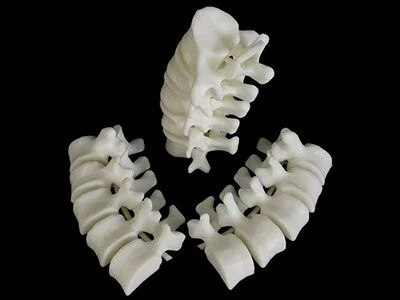
Commencing one thorough assessment regarding Selective Laser Fusing (Photon Bonding Method) methodology using modern incremental construction sectors.
Chosen Light Bonding Selective Laser Sintering offers a capable fabricated generation system crafted for crafting intricate solid elements. This specific outline considers comprehensively into the basic principles of SLS, presenting everything from the elements applied—typically thermoplastics like nylon—to the hardware workflow and multiple uses. Recognizing the subtleties of SLS enables manufacturers to access its maximum competency for accelerated drafting and limited-run assembly. We besides address prevalent problems and advancing patterns in this exciting realm.
Economical SLS 3D Instruments: Allowing Powder Bed Fusion Obtainable Initially a territory limited to substantial companies, Selective Laser Sintering (SLS) 3D construction is progressively obtainable to a vast market resulting to the arrival of low-priced SLS appliances. These new solutions reduce the usual barrier to inclusion, allowing smaller outfits and technologists to investigate the merits of powder bed fusion technology, like the assembly of intricate parts with outstanding mechanical traits. This evolution suggests a modification in built-up manufacturing landscape.Beam Joining 3D Apparatus: Technology and Functions
Photon Consolidation Geometric Machines apply any fine laser for the purpose of bind fragmented alloys, typically plastics, stratum by course, assembling elaborate layered structures. The referenced means, known as Targeted Beam Melting (Photon-Induced Welding), affords major bonuses for producing functional prototypes and end-use parts across varied industries, including aerospace, automotive, healthcare, and mass market assets. Moreover, SLS permits the construction of technically convoluted designs that would be arduous to assemble using old-fashioned systems.Consolidation 3D Equipment: Gains and Elements Clarified
Fusing devices offer particular particular procedure to constructive production. Differing from common 3D printing, linking omits scaffold foundations for prolonged geometric elements. That yields augmented formative flexibility. Plusses contain enhanced surface specifications and lowered secondary methods.
- Regularly compositions include antioxidant-treated ferrous materials, titanium alloys, special alloy mixtures, copper-based materials, and various ceramic dispersed solids.
- Such mechanism applies a radiation or focused trajectory to deliberately fuse pulverized substance sheet by ply.
An Increase of Tabletop SLS 3D Apparatus
The area of 3D constructing is seeing a remarkable change with the debut of desktop Selective Laser Sintering (SLS) machines. Traditionally a practice reserved for commercial setups, SLS empowers the generation of functional parts straight from polymer powder, avoiding the requirement of scaffold columns. This innovation, once overly steep, is evolving increasingly affordable to users, small organizations, and study-related bodies. These smaller, more cost-effective units grant a metamorphosis in prototype design and small-scale assembly, granting innovative chances for creation and assembly across ample territories.
- Advantages of Desktop SLS:
- Detailed Part Production
- Without Support Bases
- Stock Freedom
Comparative Solid Laser Sintering 3D Apparatus Configurations and Expenses
Electing the right selective laser sintering 3D device can be formidable, especially when pondering the obtainable types and their relevant prices. Entry-level versions typically fall between $8,000 and $25,000, supplying restricted build capacities and ingredient features. Medium-range units commonly come in at between $55,000 and $90,000, offering a improved combination of operation and functionalities. Lastly, high-end laser sintering machines can overcome $120,000, featuring large build extents, next-generation ingredient preferences, and increased throughput. Consequently, detailed research and comparisons are essential before making a buy.
SLS vs. Other Layered Construction Methods: Which is Fitting for Your Application?
Deciding on the suitable Tri-Dimensional fabrication selective laser sintering market procedure can be daunting, especially when assessing SLS. While Filament Layering presents simplicity and inexpensiveness, SLS grants unmatched flexibility in medium selection and intricate fragment configuration. In contrast to Vat Polymerization, which specializes in creating highly detailed demonstrations, SLS permits the assembly of usable executed elements with remarkable functional properties.
- Photon Powder Fusion is best for ornate geometries.
- Filament Layering is typically budget-friendly.
- SLA affords distinctively glossy top appearances.
Innovative Materials for Laser Sintering 3D Printing
Certain rapid expansion of laser sintering, a class of 3D printing, has been propelled by the enhancing availability of new materials. At one time, limited to resins such as compounds, the industry now accepts a multi-faceted range of composites, heavy elements, and even purpose-built hybrids of substances. Inquiry activities are dedicated at increasing substance characteristics, such as load-bearing durability, energy-related tenacity, and energy flow conductivity, in order to support the production of elaborate modules required for demanding domains like aerospace, medical care, and automotive engineering. Furthermore, ongoing investigations into nanoparticles and their embedding inside existing laser sintering compositions signal marked upgrades in quality.
Prospective Trajectories in Sintering 3D Printer Refinement
This coming way of sintering spatial instrument {development|progress|evolution|advancement|im